Prepare
Sing, move, and play with musical ideas before naming them.
A full-featured elementary music curriculum, grounded in standards and Kodály-informed sequencing. Connected lessons, interactive playback, and teaching guidance—so you can give more of yourself to your students.
Curriculum updates + the free rhythm pack, coming soon.

“I often tend to plan lessons that are too long, or forget questioning throughout. That’s solved with this curriculum, among so much more.”
Elementary Music with Mr. Petersen
Rhythm challenges. Movement games. Musical adventures.
Explore the work behind Note Superheroes.

Watch Level 1 on YouTube (opens in a new tab)

Watch on YouTube (opens in a new tab)

Watch on YouTube (opens in a new tab)
The curriculum connects that sense of play to a purposeful teaching sequence.
Kodály-informed sequencing
Children experience musical ideas through song, movement, and play. They connect familiar sounds to names and notation, then return to them with growing independence.
Sing, move, and play with musical ideas before naming them.
Connect a familiar sound to its name and notation when children are ready.
Return through reading, creating, and performing with growing independence.
These stages overlap across lessons. Familiar music returns with a new musical job.
Follow one familiar song through rhythm and melody.
Play the musical example
A song they know in their bodies
Chant and perform the body-percussion pattern together. Children experience the phrase through movement before they are asked to represent its rhythm.
What to notice children joining the phrase and coordinating their actions with the music.
These excerpts span multiple lessons, with sound in every example.
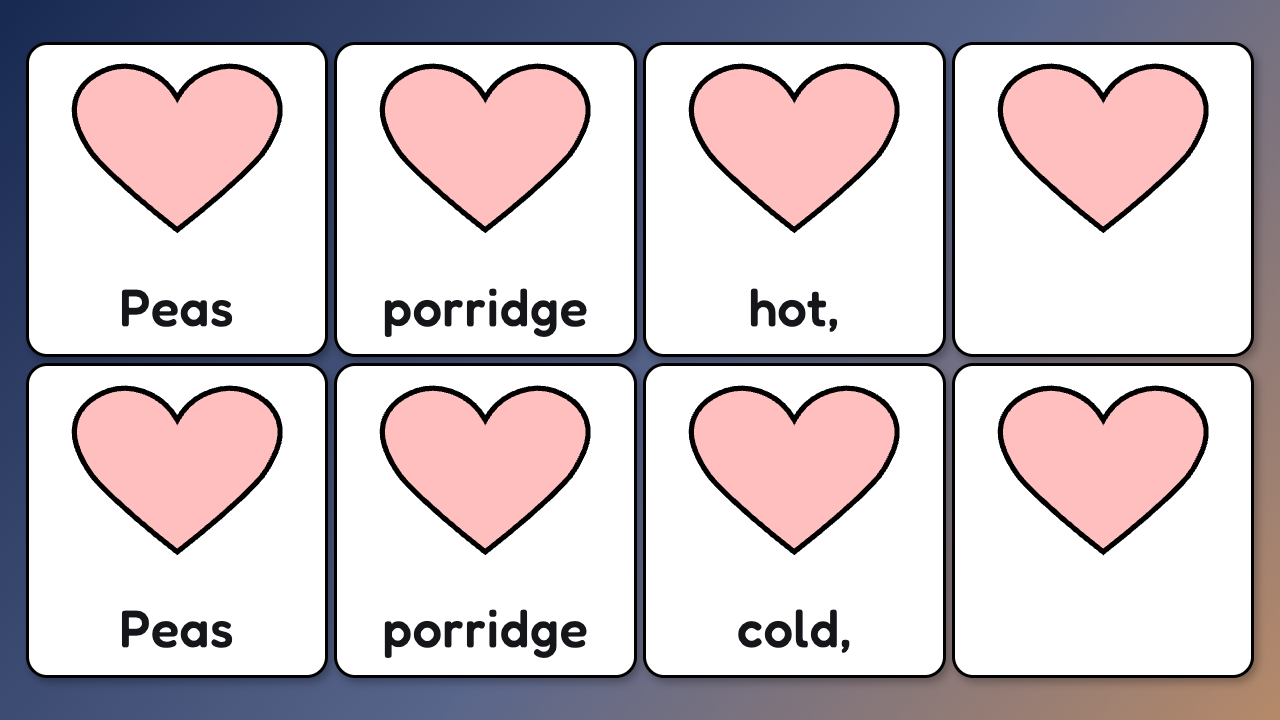
Peas porridge hot, peas porridge cold, peas porridge in the pot, nine days old.
The sixteen-beat phrase is shown first with hearts, then body-percussion and bowl icons, then rhythm notation. The melody example uses sol, la, and mi, accompanied by a drone, rhythm clicks, and a steady beat. Highlights follow each sound; the rests remain silent.
Across the grades
From early singing games to reading, expression, and independent parts.
Playful foundations · K–1
Singing games and movement give children a felt understanding of beat, rhythm, and melody.
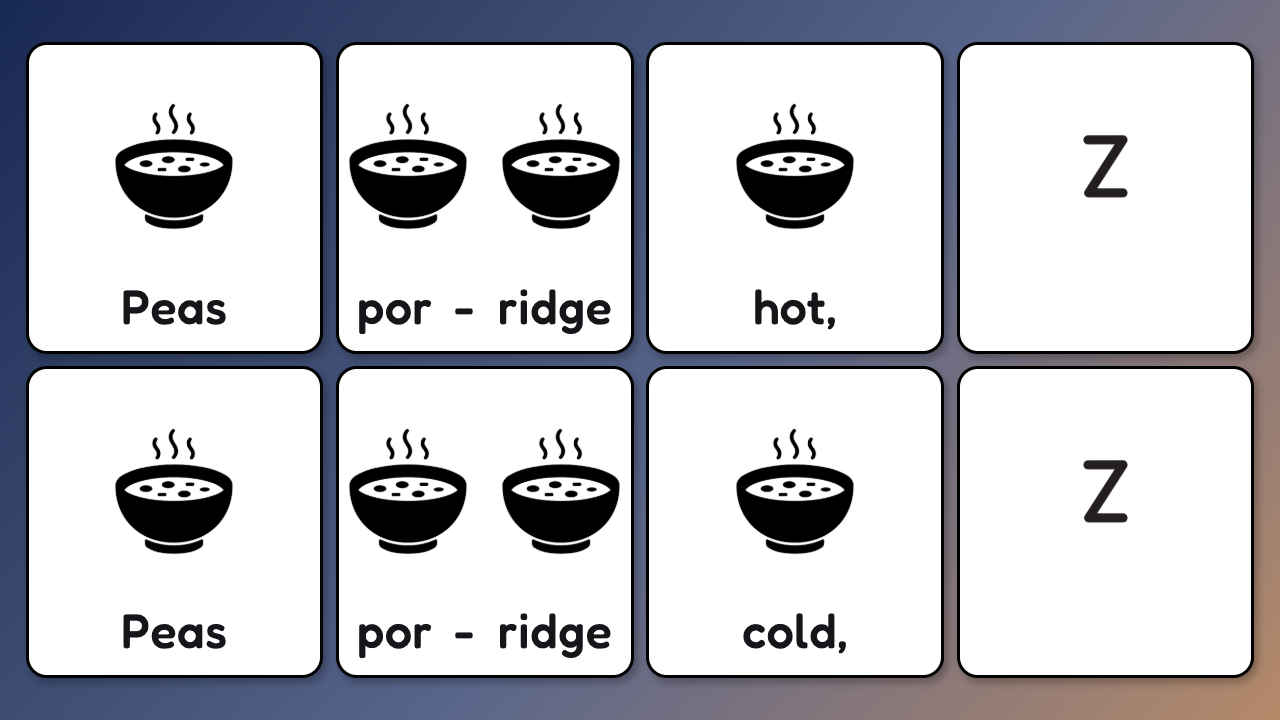
Growing literacy · Grades 1–3
Familiar songs connect sound to symbols, then return in new phrases and musical choices.
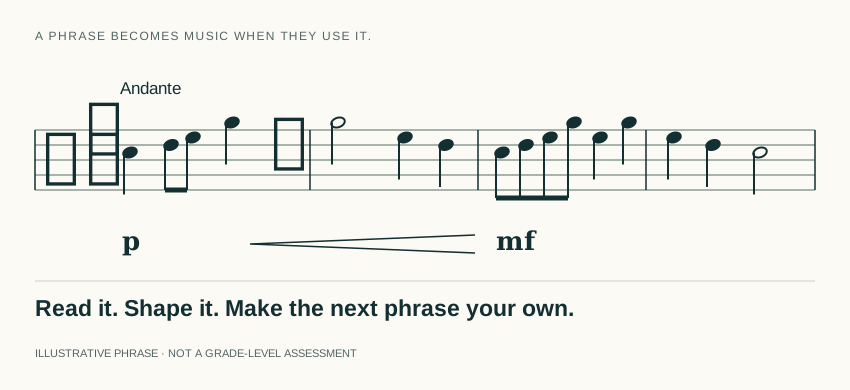
Toward ensemble readiness
Reading, expressive choices, and independent parts build toward the next musical ensemble.
Grades 4–5 in developmentSupport for the teacher
Let the lesson carry the modeling and repetition. You listen, guide, and respond to the children in front of you. Follow the teaching cues or take more control when you want it.
Start from what children already know.
Hear what they can do without the model.
Know when to support, return, or move on.
A destination beyond the next activity
The goal is musicianship children can carry forward: reading a new phrase, singing with understanding, and holding their own part while listening to others.
Explore the district approachStart with the musical goal.Work backward to the experiences children need.
Connect the lessons.Prepare, introduce, and revisit the learning through music.
Listen for what carries forward.Look for independent use, a later return, and a fresh musical challenge.

Built by a teacher, for the music room
After 17 years in the music room, I know the hours spent finding activities, connecting lessons, and wondering what will stick.
That is why each lesson belongs to a sequence, with the preparation, practice, and teaching support already connected.
So you can spend more of yourself building relationships and guiding your students as musicians.
Get more information about the curriculum and hear when the free Rhythm Refresh Pack is ready.
Six connected modules. Two familiar songs. Teaching guidance and Curse of the Forbidden Rhythm challenges.
See what’s planned for the packEnable JavaScript to join the list, or email info@notesuperheroes.com.
Updates from Note Superheroes, including free-pack news. Unsubscribe at any time. Privacy notice.